YouTube Now Auto-Detects AI-Generated Videos: What Creators Need To Know in 2026
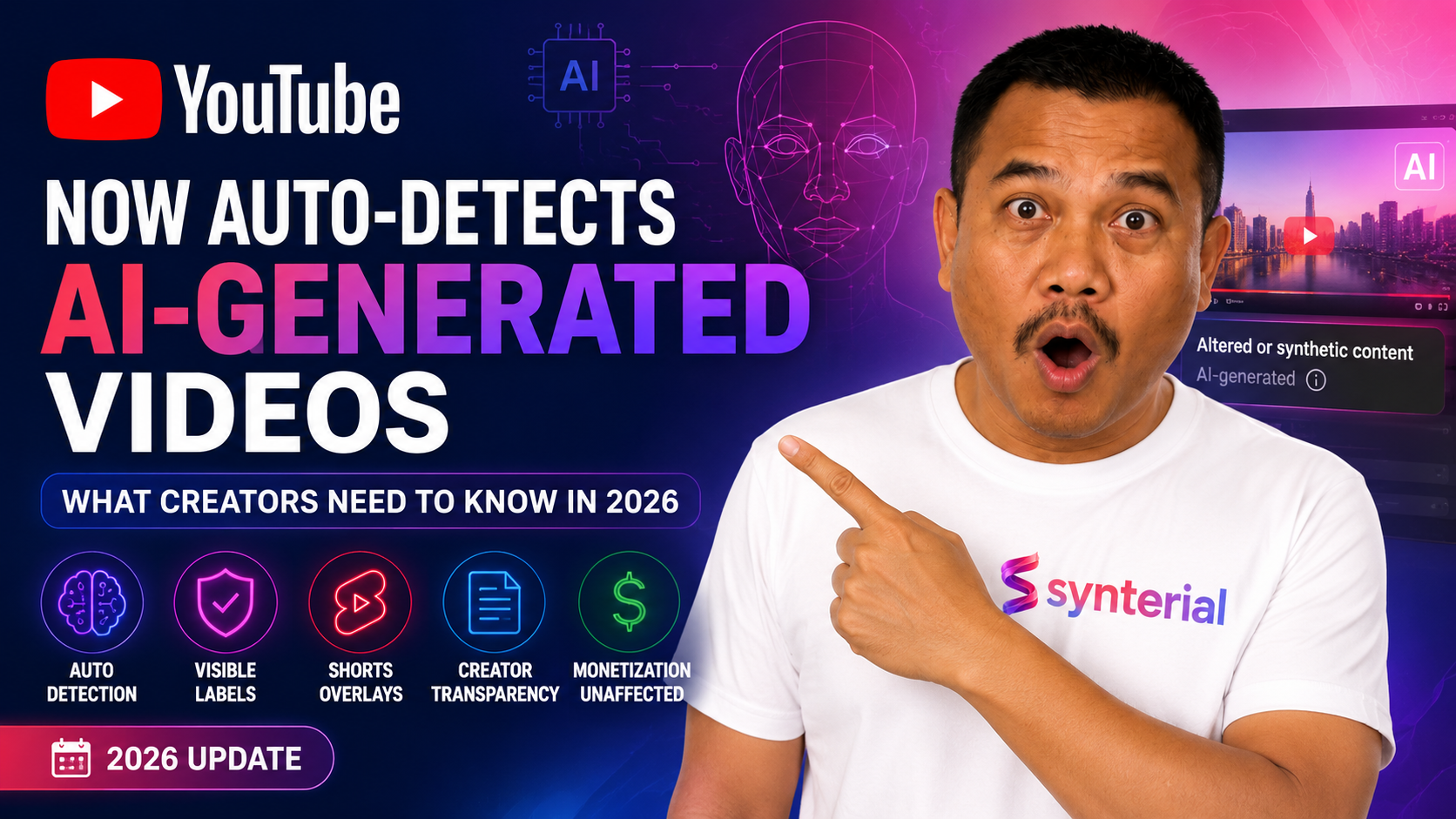
YouTube Officially Starts Detecting AI-Generated Videos
YouTube has officially begun rolling out
automatic AI-generated video detection systems.
The platform can now identify
photorealistic AI-generated content
and automatically apply disclosure labels
to videos and Shorts.
This marks one of the biggest
platform shifts for AI creators,
AI UGC businesses,
synthetic influencers,
and cinematic AI video production.
Previously,
YouTube mainly relied on creators
to manually disclose
whether content used artificial intelligence.
Now YouTube itself
actively scans uploaded videos
for signs of AI generation.
What Exactly Is YouTube Detecting?
YouTube says the system focuses on:
- Realistic AI humans
- Deepfake-style content
- AI-generated speech
- Synthetic faces
- Photorealistic AI scenes
- AI-modified real footage
The company is especially targeting
content that could potentially
mislead viewers.
Stylized animation,
fantasy visuals,
or clearly fictional content
may receive lighter handling.
However,
highly realistic AI UGC videos
are now much easier for YouTube to identify.
How YouTube Detects AI Videos
YouTube reportedly combines
multiple detection methods.
These may include:
- Internal AI analysis systems
- Metadata inspection
- C2PA authenticity data
- SynthID watermark signals
- Platform-generated AI markers
Videos generated using
YouTube’s own AI tools,
including Veo and Dream Screen,
can automatically receive labels.
Some metadata-based AI labels
may become permanent.
AI Labels Are Becoming More Visible
One major change is visibility.
Previously,
AI disclosures were often hidden
inside video descriptions
or difficult-to-find sections.
Now labels appear much more prominently.
For YouTube Shorts,
AI-generated indicators
can appear directly inside the viewer experience.
This means audiences
can immediately recognize
when content was generated
or heavily modified using AI.
Will AI Labels Hurt Monetization?
Currently,
YouTube says AI labels
will NOT directly impact:
- Monetization
- Recommendations
- Discoverability
- Ad eligibility
YouTube states
the purpose is transparency,
not punishment.
However,
many creators believe
this could eventually influence
algorithm behavior in the future.
Especially as AI content volume
continues rapidly increasing across YouTube.
What This Means For AI UGC Creators
AI UGC creators
are likely among the most affected groups.
The rise of:
- AI spokesperson videos
- Synthetic influencers
- AI-generated testimonials
- AI avatars
- Realistic product ads
has exploded throughout 2025 and 2026.
YouTube’s detection systems
suggest the platform is preparing
for a future
where AI-generated media
becomes mainstream.
Creators producing realistic AI humans
should now expect
automatic disclosure labels
to become standard.
Deepfakes And Trust Concerns
The rollout also reflects
growing concerns around deepfakes.
Governments,
platforms,
and advertisers
are increasingly demanding
stronger transparency systems
for AI-generated media.
YouTube’s automated labeling
is part of a larger industry trend
toward authenticity verification.
Other platforms are expected
to follow similar approaches.
The Future Of AI Content On YouTube
Despite the new detection systems,
AI content itself is NOT banned.
In fact,
AI-generated content
continues growing rapidly
across:
- Shorts
- UGC ads
- Cinematic storytelling
- Educational content
- Virtual influencers
- AI entertainment channels
The biggest change
is simply transparency.
The AI content era
is no longer hidden.
Platforms are now openly labeling it.
FAQ
Does YouTube ban AI-generated videos?
No.
YouTube currently allows AI-generated content.
The platform mainly focuses on transparency
and viewer disclosure.
Can YouTube automatically detect AI videos?
Yes.
YouTube now uses automated systems
to identify certain AI-generated
or heavily AI-modified videos.
Do AI labels affect monetization?
Currently,
YouTube says AI labels
do not affect monetization
or recommendations.
What kinds of AI videos get flagged?
Mostly photorealistic content,
including:
AI humans,
deepfakes,
realistic AI voices,
and synthetic scenes.
Are YouTube Shorts affected too?
Yes.
AI-generated Shorts
can also receive visible labels.
Can creators appeal incorrect AI labels?
Yes.
YouTube allows appeals
for some detection decisions.
Does this affect AI UGC creators?
Yes.
AI UGC creators producing
realistic synthetic humans
are likely to see
more automatic AI labels.
Is AI content still allowed on YouTube?
Yes.
AI-generated content
is still fully allowed
under YouTube’s current policies.