The Rise of FLUX AI: Why Open-Source Image Generation Is Changing Everything
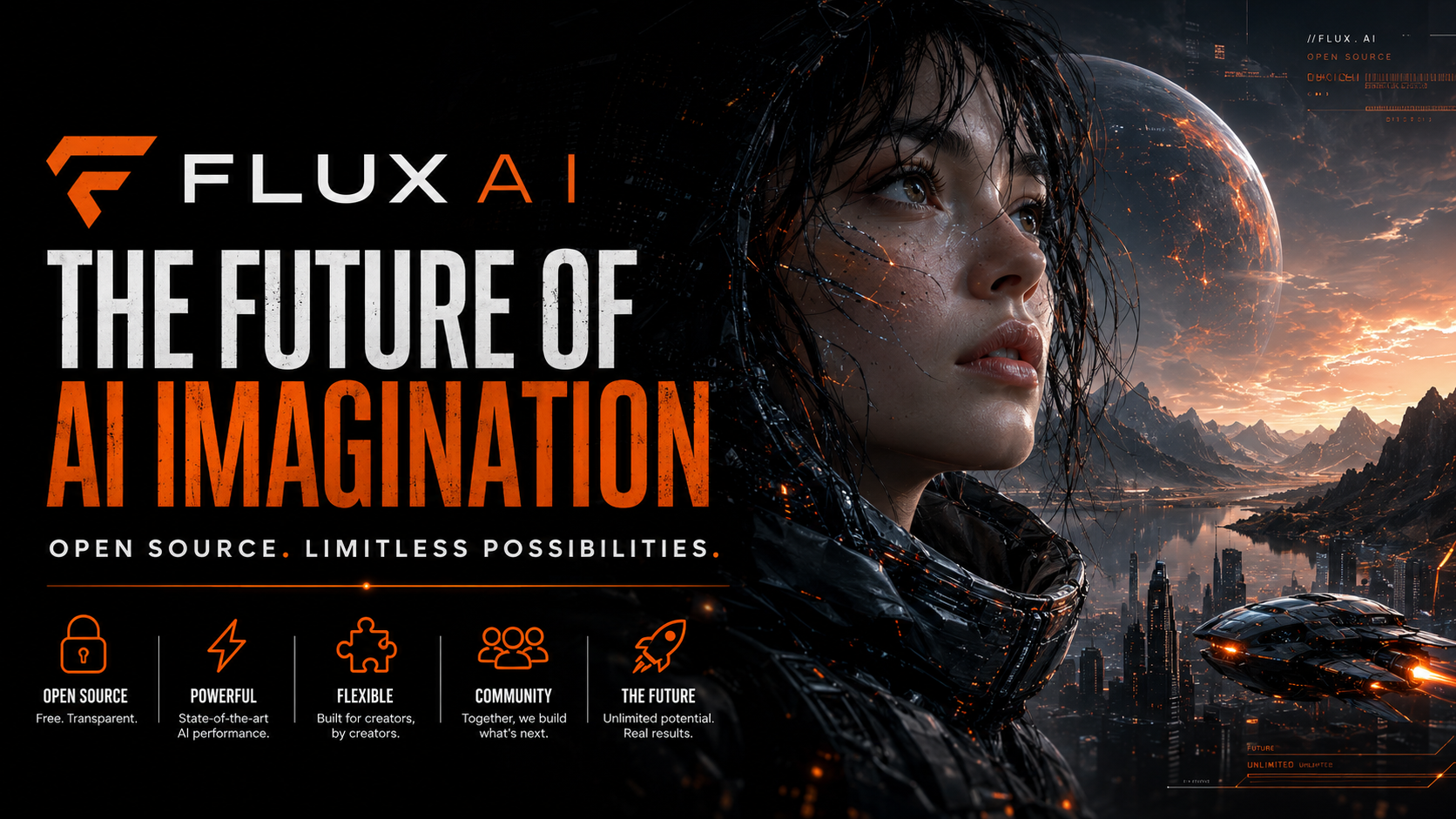
Artificial intelligence image generation is evolving faster than most people expected. For years, platforms like Midjourney dominated the conversation around realistic AI art, cinematic renders, and professional creative workflows.
But a new wave of open-source AI models is beginning to shift the landscape.
One name keeps appearing everywhere:
What Is FLUX AI?
FLUX is a next-generation AI image generation model designed to produce highly realistic visuals, cinematic compositions, and professional-quality outputs while remaining flexible for creators, developers, and AI enthusiasts.
Unlike traditional closed AI systems, FLUX gives creators significantly more freedom:
- Local deployment support
- API integrations
- LoRA fine-tuning
- Workflow customization
- Commercial flexibility
- Community-driven improvements
This combination is why many creators now believe open-source AI image generation is entering a completely new era.
Why FLUX AI Is Going Viral
The reason FLUX is exploding across social media is simple:
The realism gap is collapsing.
Just a year ago, most open-source image models struggled with:
- Human anatomy
- Facial realism
- Text generation
- Composition consistency
- Lighting quality
- Prompt understanding
FLUX dramatically improves many of these weaknesses.
Today, creators are generating:
- Cinematic sci-fi scenes
- Hyper realistic portraits
- Anime-inspired visuals
- AAA game concept art
- Product advertisements
- Social media campaigns
- Storyboards
- Movie-style posters
Many of these outputs now compete directly with premium AI platforms.
Open-Source AI vs Closed AI
One of the biggest discussions in the AI community today is whether open-source AI models will eventually outperform closed commercial systems.
Closed AI platforms traditionally offered:
- Better realism
- Faster inference
- Cleaner interfaces
- Strong infrastructure
However, open-source AI has several powerful advantages:
1. Freedom to Customize
Creators can modify workflows without platform restrictions.
2. Community Innovation
Thousands of developers improve tools simultaneously.
3. Lower Long-Term Costs
Many creators avoid expensive subscription ecosystems.
4. Fine-Tuning Potential
Custom LoRAs and training pipelines allow highly specialized outputs.
5. Local Ownership
Artists and studios can run models privately on their own hardware.
This shift is why many people believe the future of AI creativity will become increasingly decentralized.
Why Creators Are Switching to FLUX
Many artists and AI creators are experimenting with FLUX because it fits modern production workflows better.
Instead of relying entirely on Discord-based generation systems, creators can integrate FLUX into:
- Custom AI pipelines
- Creative automation systems
- SaaS platforms
- Local generation setups
- Video production workflows
- Batch image rendering systems
For developers building AI products, this flexibility is extremely valuable.
FLUX AI and the Future of Content Creation
The impact of FLUX goes beyond generating cool images.
It changes how creators think about production itself.
Modern creators now use AI for:
- Ad creatives
- Marketing campaigns
- UGC content
- Storyboarding
- Character design
- Thumbnail generation
- Branding assets
- Social media visuals
As models continue improving, the barrier between human-created and AI-generated content becomes harder to distinguish.
That is why discussions around AI realism, open-source models, and creative automation are growing rapidly online.
Is FLUX Better Than Midjourney?
This question appears constantly online.
The answer depends on workflow needs.
Midjourney Strengths
- Strong artistic direction
- Easy-to-use ecosystem
- Beautiful stylization
- Fast generation experience
FLUX Strengths
- Open-source flexibility
- Custom training support
- Local deployment
- API integration
- Developer freedom
- Advanced workflow control
For many creators, the real conversation is no longer:
“Which one is better?”
Instead, it is:
“How long before open-source fully catches up?”
And based on recent developments, many believe that moment is approaching faster than expected.
The Future of Open-Source AI
The AI industry is entering a new phase where community-driven models are becoming powerful enough for professional production.
As hardware improves and AI workflows become easier to use, open-source creative tools may become a major force across:
- Gaming
- Film production
- Advertising
- SaaS products
- Social media marketing
- Independent creator businesses
The next generation of creators will likely build with AI systems that are flexible, customizable, and deeply integrated into their production pipelines.
And right now, FLUX is one of the biggest signals of that shift.
What is FLUX AI?
FLUX AI is an advanced open-source AI image generation model designed to create realistic visuals, cinematic artwork, concept art, marketing assets, and professional-quality AI-generated images.
Why is FLUX AI becoming popular?
FLUX AI is gaining popularity because it delivers highly realistic image generation while remaining open-source, customizable, and developer friendly. Many creators believe it significantly reduces the realism gap between open-source and commercial AI models.
Is FLUX AI free to use?
Some versions and implementations of FLUX AI are available through open-source ecosystems, local deployments, and community tools. Availability depends on the platform or workflow being used.
Is FLUX AI better than Midjourney?
FLUX AI and Midjourney serve different workflows.
Midjourney focuses on ease of use and artistic stylization, while FLUX AI offers greater flexibility, API integrations, local deployment support, and customizable pipelines for advanced creators and developers.
Can FLUX AI generate realistic images?
Yes. FLUX AI is known for generating highly realistic portraits, cinematic environments, sci-fi visuals, product renders, and detailed concept art with strong lighting and composition quality.
What can creators use FLUX AI for?
Creators use FLUX AI for:
- AI art generation
- Social media content
- Advertising creatives
- Storyboards
- Character design
- Product visualization
- YouTube thumbnails
- UGC marketing assets
- Game concept art
- Cinematic scenes
Does FLUX AI support LoRA training?
Yes. FLUX AI workflows often support LoRA fine-tuning, allowing creators to train styles, characters, aesthetics, and specialized visual outputs for more consistent generations.
Can developers integrate FLUX AI into applications?
Yes. Many developers integrate FLUX AI into SaaS platforms, automation systems, AI creative tools, and custom applications using APIs and local inference pipelines.
Why is open-source AI important?
Open-source AI allows creators and developers to customize workflows, run models locally, experiment freely, and contribute improvements without relying entirely on closed commercial platforms.
What is the future of FLUX AI?
Many creators believe FLUX AI represents a major shift toward decentralized and community-driven AI creativity. As models continue improving, open-source AI may become a dominant force across design, gaming, film, marketing, and digital content creation.